
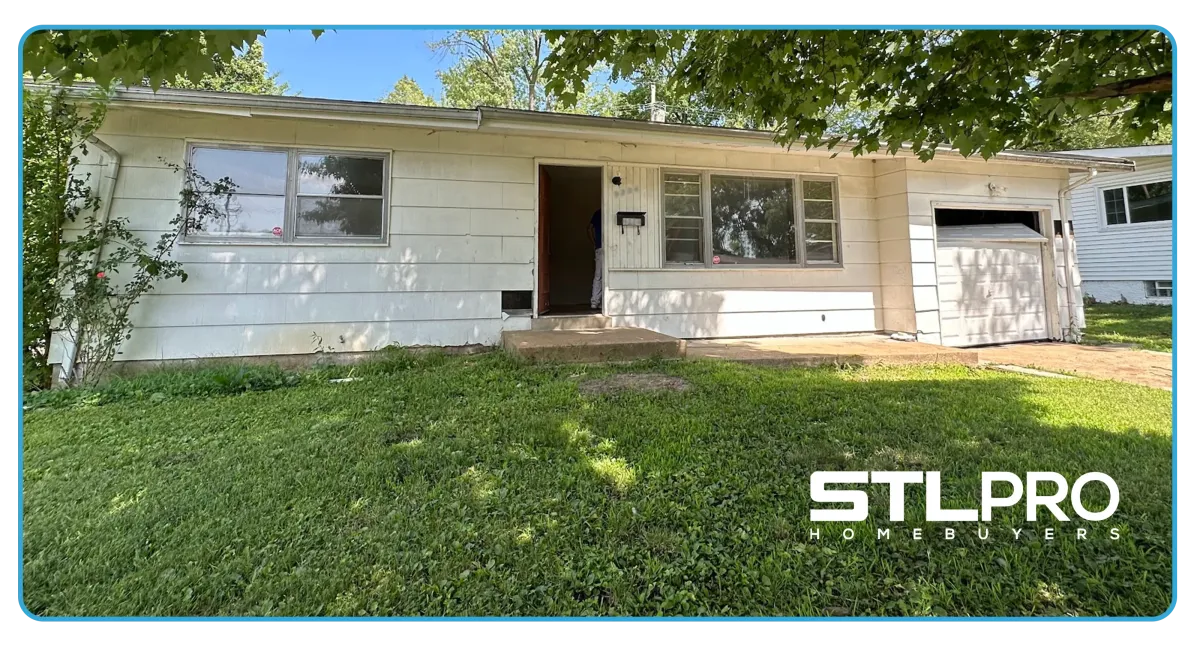
What to Do With an Inherited House in Missouri
What to Do With an Inherited House in Missouri
Inheriting a house often comes during one of the most emotionally difficult times in your life. While others may see a property, you see the place where holidays were spent, where a parent or grandparent built a lifetime of memories. There is no right or wrong way to feel about it, and there is certainly no rush to make a decision you are not ready for.
That said, the reality of inheriting property in Missouri brings with it a set of practical decisions that need to be addressed, sometimes sooner rather than later. There are carrying costs like property taxes, insurance, and maintenance. There are legal processes like probate. And if you have inherited the property alongside siblings or other family members, there may be differing opinions about what to do next.
This guide is written to give you clear, straightforward information about your options when you inherit a house in Missouri. Whether you plan to keep the home, rent it out, sell it on the open market, or explore a quick cash sale, understanding the process will help you make the decision that is right for your situation.
Your Options When You Inherit a House in Missouri
Every inherited property situation is unique, but most heirs in Missouri ultimately face the same four choices. Each has real advantages and real drawbacks, and the best choice depends on your financial situation, the condition of the property, and how many people share ownership.
Move Into the Home
If you are looking for a new primary residence or the home holds deep personal value, keeping it can make sense. You will gain a place to live without a new mortgage (assuming the existing one is paid off).
Pros: No housing payment, emotional value, potential long-term appreciation.
Cons: Ongoing property taxes, maintenance costs, possible repairs needed to bring the home up to your standards.
Rent It Out
Turning an inherited house into a rental property can provide consistent monthly income, particularly in high-demand areas of St. Louis County and St. Charles County.
Pros:Passive income stream, property appreciation over time, tax deductions for landlord expenses.
Cons:Landlord responsibilities, tenant issues, upfront costs to make the home rent-ready, property management fees.
Sell on the Open Market
Listing with a real estate agent may get you the highest sale price, but it comes with time, cost, and uncertainty. You will typically need to make repairs, stage the home, and wait for the right buyer.
Pros: Potentially highest sale price, wide market exposure.
Cons: 5-6% agent commissions, repair costs, 60-90+ day timeline, closing cost contributions, uncertainty.
Sell for Cash As-Is
A cash home buyer purchases the property in its current condition, without requiring repairs, inspections, or agent commissions. This option prioritizes speed and simplicity.
Pros: Close in as few as 7 days, no repairs, no commissions or fees, certainty of closing.
Cons: Sale price will typically be below full market value to account for the buyer taking on repairs and risk.
Understanding Missouri Probate and Inherited Property
Before you can do much of anything with an inherited house in Missouri, you will likely need to navigate the probate process. Probate is the court-supervised procedure that validates the deceased person's will (if one exists), settles outstanding debts, and legally transfers assets to the rightful heirs.
In Missouri, probate is handled through the circuit court in the county where the deceased person resided. Here is what you can expect from the process:
The Missouri Probate Timeline
Probate in Missouri typically takes between 6 and 12 months, though it can extend longer if the will is contested or the estate is complex. The process generally follows these stages:
Filing the will and petition:A petition is filed with the circuit court to open probate. If there is a will, it is submitted for validation.
Appointment of the personal representative:The court issuesLetters Testamentary(if there is a will) orLetters of Administration(if there is not), granting authority to the personal representative to manage the estate.
Notification of creditors and heirs:Missouri law requires that known creditors and all heirs be notified. Creditors generally have six months to file claims against the estate.
Inventory and appraisal:The personal representative must inventory all estate assets, including real property, and may have the property appraised.
Settling debts and distributing assets:Once creditors are satisfied, the remaining assets, including real estate, are distributed to the heirs according to the will or Missouri intestacy laws.
Missouri Small Estate Affidavit:If the total value of the estate (excluding real property held as a beneficiary) is under $40,000, you may be able to use a small estate affidavit instead of going through full probate. This process, outlined in Missouri Revised Statutes Section 473.097, is significantly faster and less expensive. However, it applies to personal property and has specific requirements, so consult with an attorney to determine if your situation qualifies.
Always consult a professional advisor and attorney.
Personal Representative Responsibilities
The personal representative (sometimes called the executor) has a fiduciary duty to manage the estate responsibly. For inherited real estate, this includes keeping up with property taxes, maintaining homeowners insurance, securing the property, and making necessary repairs to preserve its value during probate. Failing to do so can create personal liability.
Tax Implications of Inherited Property in Missouri
Taxes are one of the most common concerns for people who inherit a house in Missouri, and the good news is that Missouri is relatively favorable when it comes to inherited property.
No State Inheritance Tax
Missouri does not impose a state inheritance tax or a state estate tax. This means you will not owe the state of Missouri anything simply for receiving the property as an inheritance. This is a significant advantage compared to states like Maryland, New Jersey, or Pennsylvania, which do levy inheritance taxes.
The Stepped-Up Basis
One of the most important tax concepts for inherited property is the stepped-up basis. When you inherit a home, the IRS adjusts the property's cost basis to its fair market value on the date of the owner's death, rather than what the original owner paid for it.
For example, if your parent bought their home in 1985 for $60,000 and it was worth $220,000 when they passed away, your cost basis for capital gains purposes is $220,000, not $60,000. If you sell the home for $225,000, you would only owe capital gains tax on the $5,000 gain, not on $165,000. This is why many financial advisors recommend that heirs who plan to sell do so relatively soon after inheriting, while the stepped-up basis closely matches the current market value.
Ongoing Property Taxes
Regardless of what you decide to do with the property, you are responsible for ongoing property taxes from the date you inherit the home. In St. Louis County and St. Charles County, property tax rates vary by municipality, but you should budget accordingly to avoid delinquency. Missouri allows county assessors to reassess property upon a change in ownership, which could increase your property tax bill if the home had not been reassessed recently.
Federal Capital Gains Tax
If you sell the inherited property for more than the stepped-up basis, you will owe federal capital gains tax on the profit. If you held the property for more than one year after inheriting it, you will pay the long-term capital gains rate, which is lower than the short-term rate. Your tax bracket determines the exact percentage, but most people fall into the 0% or 15% long-term capital gains bracket. Always consult a legal tax professional and attorney.
What If Multiple Heirs Inherited the Property?
One of the most challenging aspects of inheriting a house in Missouri is sharing ownership with siblings or other family members. When a property passes to multiple heirs, each person owns a fractional interest. This means no single heir can make unilateral decisions about the property without the others' consent.
When Everyone Agrees
If all heirs agree on what to do with the property, the process is straightforward. You can collectively decide to sell, with each heir receiving their proportional share of the proceeds. You can also agree on a buyout arrangement, where one heir purchases the others' shares at fair market value. A written agreement among all parties is strongly recommended, even when relationships are amicable.
When Heirs Disagree
Disagreements between heirs are common and can become deeply contentious. One sibling may want to keep the family home while another needs the cash from a sale. In Missouri, when co-owners cannot reach an agreement, any party can file a partition action in circuit court.
A partition action asks the court to either physically divide the property (a partition in kind) or, more commonly for residential real estate, order the property sold and the proceeds divided among the co-owners (a partition by sale). Partition proceedings add legal costs and take time, so most attorneys recommend exhausting negotiation options first.
Practical Tip:If you anticipate a disagreement among heirs, consider engaging a neutral mediator or real estate attorney early in the process. The cost of mediation is typically far less than the cost of a partition action, and it often leads to outcomes that all parties can accept.
How to Sell an Inherited House Fast in St. Louis
For many heirs, selling the inherited property quickly is the most practical option. You may live out of state, the house may need significant repairs, or you simply may not be in a position to take on the responsibilities of homeownership or being a landlord. If speed and simplicity are your priorities, selling to a local cash home buyer is worth considering.
Why a Cash Sale Makes Sense for Inherited Homes
Inherited properties often come with unique challenges that make a traditional sale difficult or impractical:
Deferred maintenance:Older homeowners may not have kept up with repairs in their final years, leaving the home with outdated systems, cosmetic issues, or even structural concerns.
Carrying costs add up fast:Every month you hold the property, you are paying property taxes, insurance, utilities, and lawn care. For a vacant inherited home, these costs can total hundreds of dollars per month with no return.
Out-of-state heirs:If you do not live in the St. Louis area, managing repairs, showings, and a traditional sale from a distance is extremely difficult.
Emotional burden:Dealing with a loved one's belongings and the ongoing responsibility of their home can prolong the grieving process. A quick sale allows you to find closure sooner.
The STL Pro Homebuyers 3-Step Process
At STL Pro Homebuyers, we work with heirs throughout St. Louis County and St. Charles County who need a straightforward path to selling an inherited home. Here is how it works:
1. Contact Us With Your Property Details
Submit your information online here. Tell us about the property and your situation. There is no pressure and no obligation.
2. Receive a Fair Cash Offer
We will evaluate the property and present you with a no-obligation cash offer, typically within 24 to 48 hours. We buy houses in any condition, so you do not need to worry about repairs, cleaning, or removing personal belongings.
3. Close on Your Timeline
If you accept our offer, we can close in as few as 7 days or on whatever timeline works for you and your family. There are no agent commissions, no fees, and no surprises. You choose the closing date, and we handle the rest.
Learn more about selling an inherited house in St. Louis or selling a probate house in St. Louis on our website.
Common Mistakes When Dealing With an Inherited House
The process of managing an inherited property is unfamiliar to most people, and well-meaning heirs frequently make mistakes that cost them time and money. Here are five of the most common pitfalls to avoid:
Waiting Too Long to Take Action
It is natural to want time to process your loss, and you should absolutely take the time you need. But leaving a house vacant and unattended for months creates real problems: deferred maintenance accelerates, property taxes and insurance continue accruing, vandalism risk increases, and the property may lose value. Even if you are not ready to sell, take steps to secure and maintain the property.
Not Understanding the Stepped-Up Tax Basis
Some heirs mistakenly use the original purchase price as their cost basis, resulting in a much larger capital gains tax liability than necessary. Others fail to get an appraisal at the time of death to establish the stepped-up basis, which can cause problems later. Work with a tax professional to document the property's fair market value as of the date of death.
Neglecting Insurance Coverage
The deceased owner's homeowners insurance policy does not automatically transfer to you. In fact, most insurance policies have a vacancy clause that voids coverage if the home is vacant for more than 30 to 60 days. Contact the insurance company immediately after inheriting the property to update the policy or obtain a new one. A vacant home policy is essential for unoccupied inherited properties.
Skipping the Title Search
Before selling an inherited property, a thorough title search is critical. There may be outstanding liens, unpaid property taxes, unrecorded easements, or other title defects that must be resolved before a clean transfer can occur. These issues are especially common with older properties and can delay or derail a sale if discovered late in the process.
Pricing Based on Emotion Rather Than Market Value
It is difficult to separate the sentimental value of a family home from its actual market value. Overpricing an inherited home based on memories rather than comparable sales data leads to extended time on market, price reductions, and ultimately a lower net return. If you choose to list on the open market, rely on a professional appraisal and your agent's market analysis, not your attachment to the home.